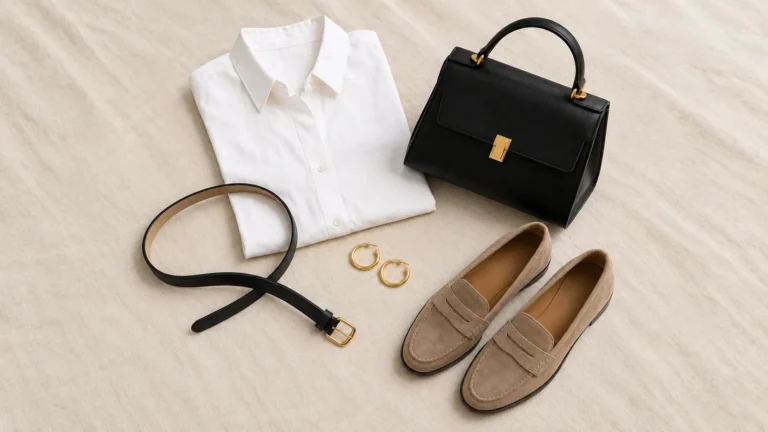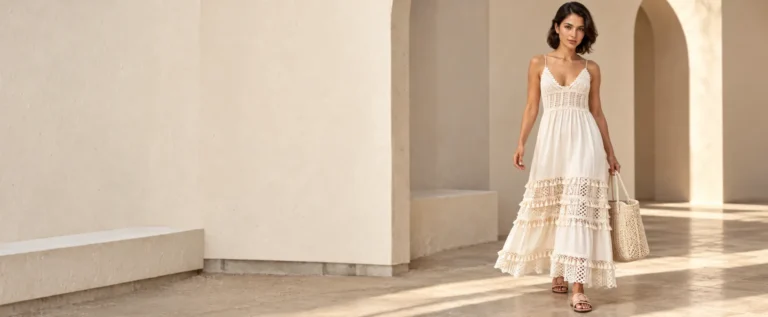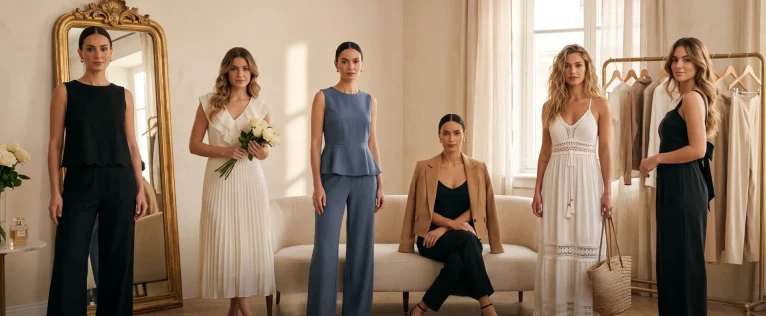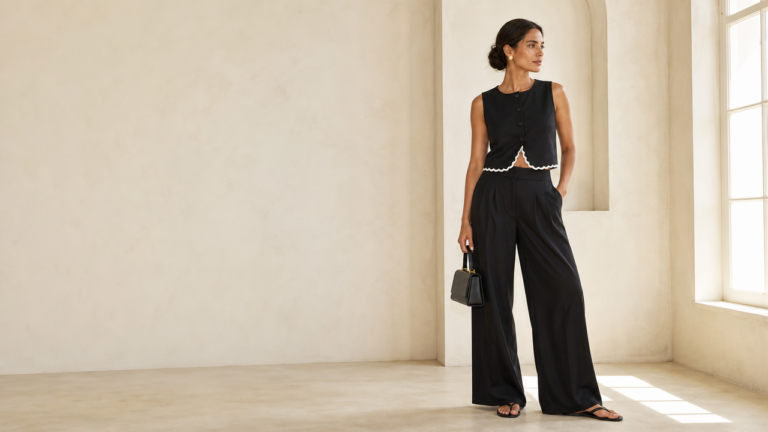


A “fashion mistake” isn’t wearing something someone else doesn’t like. It’s a choice that pulls you away from the effect you’re after: a clearer silhouette, comfort to move, or a more cohesive outfit.
Before you buy anything new, check these seven points. Often one small fix changes how the whole look reads.
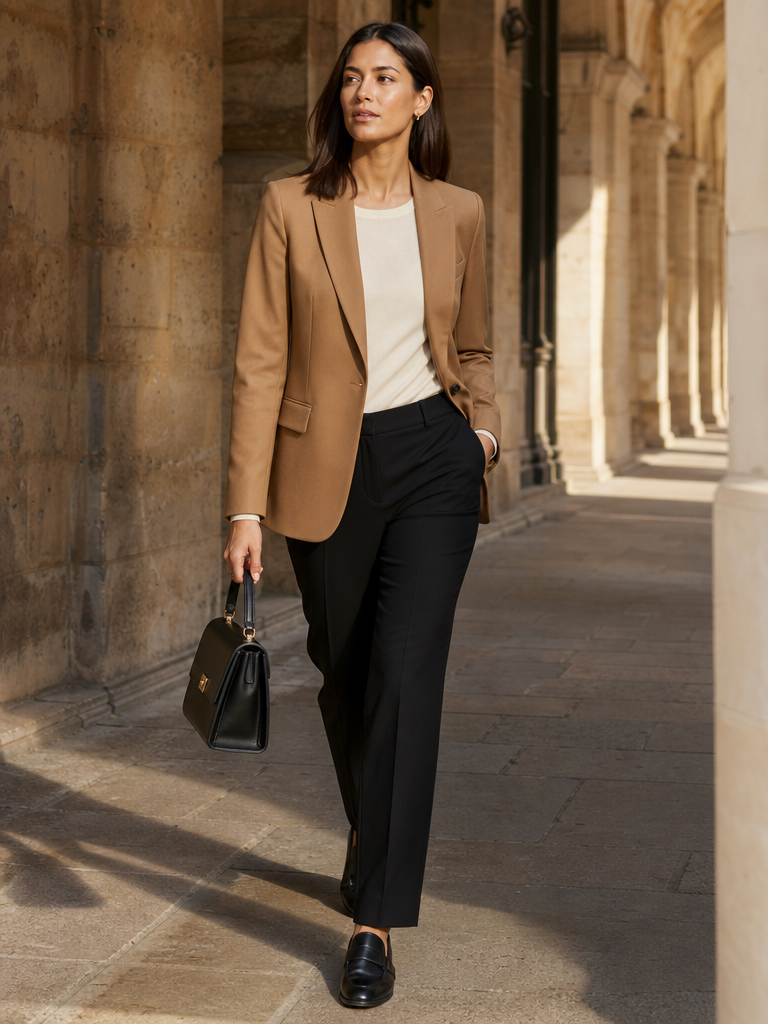
1. Buying the size on the label
Sizing changes between brands and patterns. If a blazer pulls when you button it or trousers restrict your movement, the number on the label won’t fix it. Check shoulders, waist, hips and length, and look at the garment measurements when they’re available. Sizing up or down, or getting it altered, usually works better than putting up with an uncomfortable fit.
Buy by measurements and by how you move, not by the number.
2. Ignoring trouser and sleeve length
Length changes the visual line and your comfort. Try trousers on with the shoes you’ll actually wear and check whether the hem drags on the floor or bunches where you don’t want it. On a jacket, make sure the sleeve lets you move your hand naturally. A simple alteration often rescues a piece you already love.
Try trousers on with their shoes. Always.
3. Stacking statement pieces with no hierarchy
A big print, a voluminous sleeve and an eye-catching bag can coexist if there’s a clear intention. When they all compete for the spotlight, pick one as the star and let the rest support it.
For example, a floral blouse shines with plain trousers and understated jewelry. If you want more expression, repeat one of its colors in your bag.
One statement piece per look. The rest are the supporting cast.
4. Forgetting proportion between volumes
There’s no universal “fitted on top, loose on the bottom” formula. But looking at your outfit from a couple of meters away helps you see where each volume starts and ends. Try tucking in just the front of your shirt, opening your jacket or changing the length of your outer layer. Keep the proportion that lets you move and looks like the image you want to project.

Take two steps back from the mirror before you leave.
5. Shopping for a life you don’t live
If you rarely go to formal events, another occasion dress won’t solve your mornings. List your real scenarios and assign clothes to each one. Prioritize the piece that covers a frequent need over one you only admire in a photo.
Dress for your real week, not your feed.
6. Overlooking fabric and care
A crooked seam, a fabric that turns sheer in everyday light or a piece that needs care you can’t give it delivers less than it promises. Check finishes and lining when there is one. Read the fiber and care label before you pay and follow its instructions when you wash.
Rather than hunting for the “right” fiber, look for a piece that suits how you’ll use it.
The care label is part of the price too.
7. Adding accessories out of habit
A necklace over an already decorated neckline adds noise; small earrings might be enough. Put on the full outfit, remove one accessory and see if the focus improves. Or add one when the outfit needs a visual finish.
You’ll find examples by aesthetic in our guide to common mistakes when pairing accessories.
Take one off before you leave. If you don’t miss it, it was too much.
Start with a single fix
Don’t change everything at once. Pick one tweak from this list and try it in your next outfit. The goal is to dress with more clarity and feel like yourself. If you want a quick starting point, read how to look more put-together with what you already own.
Frequently asked question
Are there pieces I should never wear?
Not as a general rule. Ask whether they work for the occasion, let you move and create the effect you want.