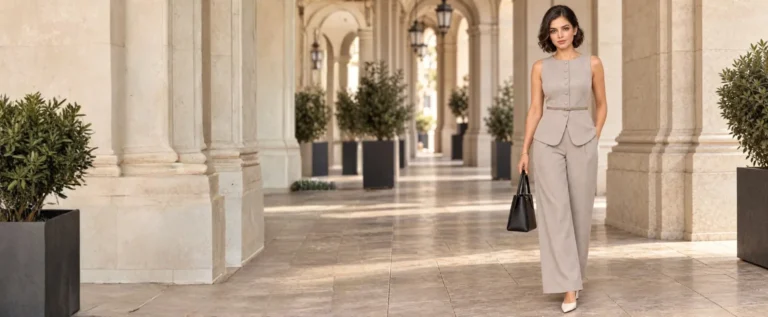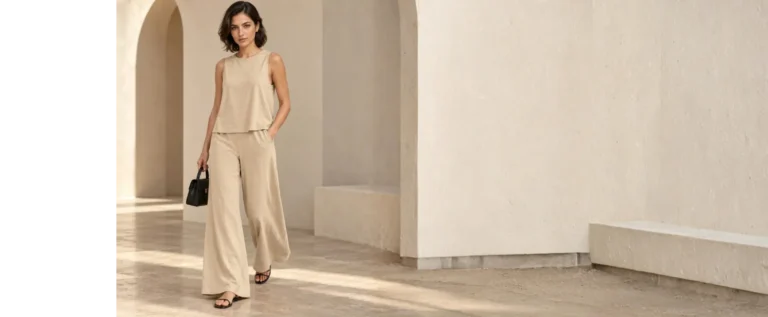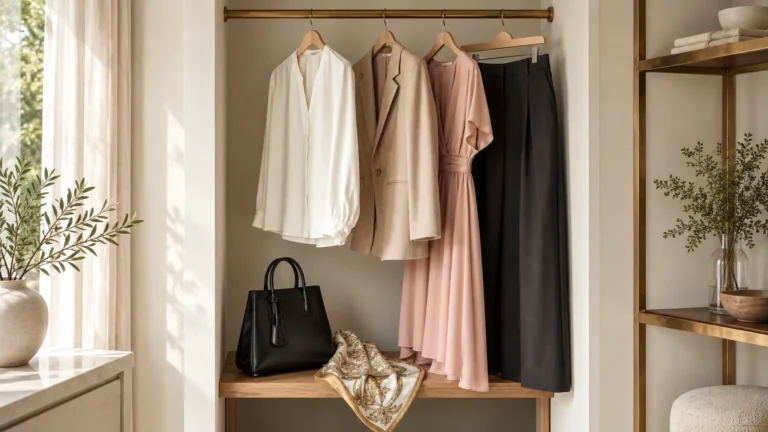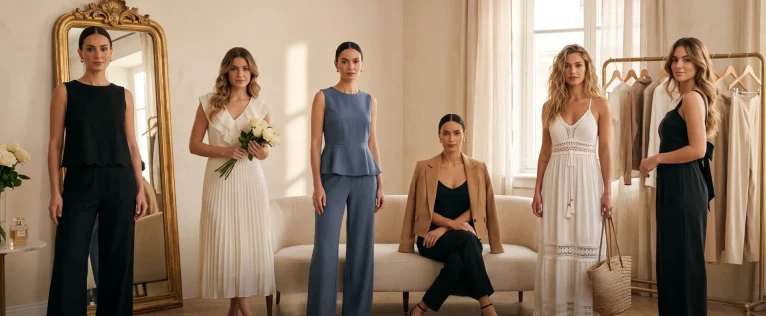

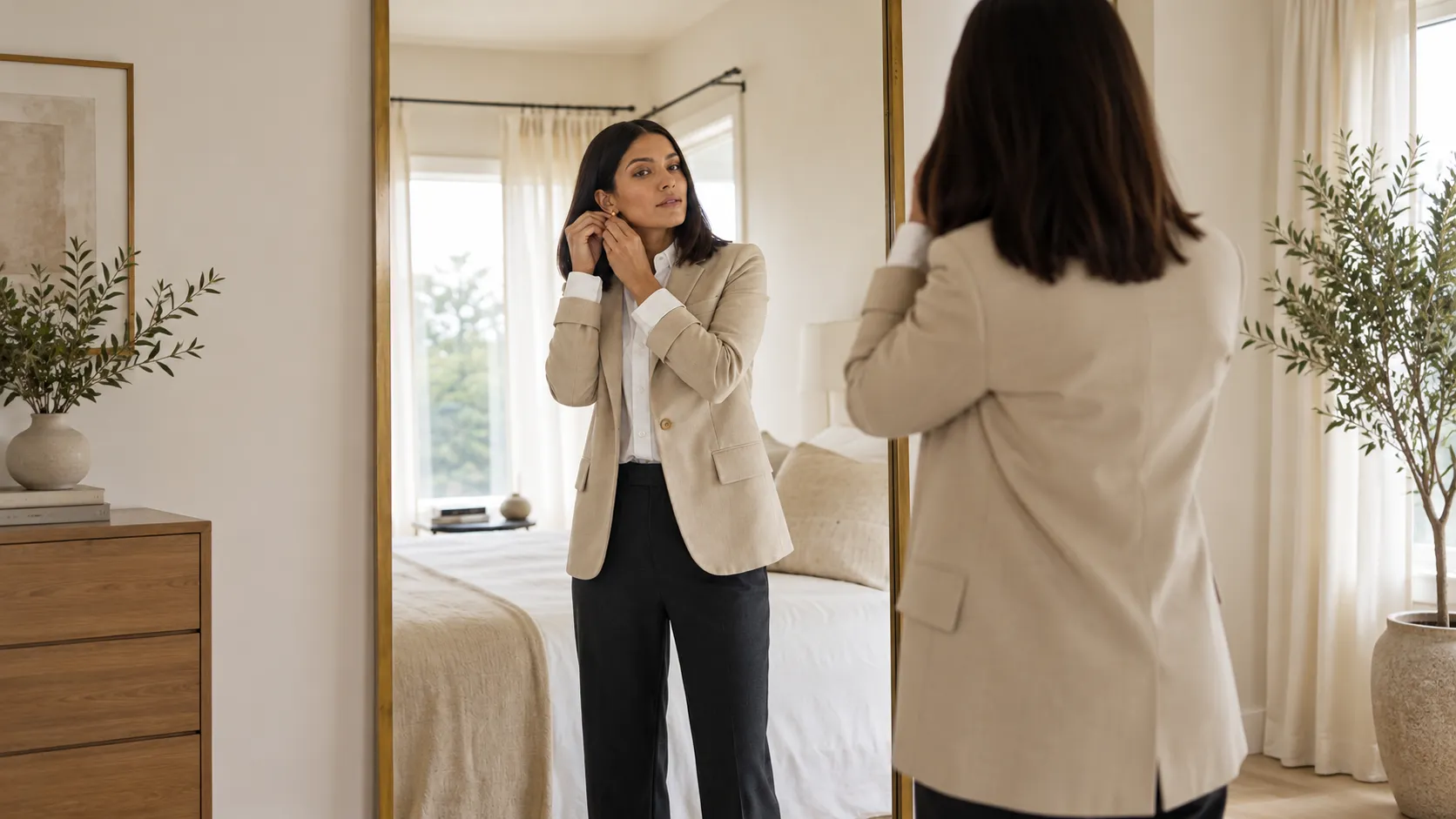
Looking more put-together can start with the clothes you already have. Most of the time, the change people notice comes from three things: preparing your pieces, checking the fit and finishing the outfit with intention.
You don’t need to turn every day into a formal occasion. A simple outfit can look polished and still be comfortable.
Start with the piece that fits you best
Pick a piece you feel good in today: trousers, a dress or a shirt. Use it as your starting point and add two elements that go with it. That cuts down on last-minute decisions.
If that piece needs a button, a hem or a clean, take care of it first. A favorite piece that’s ready to wear is worth a lot.
Start with what already fits you well. The rest of the outfit builds around it.
Six tweaks you can try this week
1. Check the condition of your clothes
Ironing or steaming suited to the fabric, a lint brush and clean shoes make a look read as more cared for. Always follow the label so you don’t damage the material. Laying out your outfit the night before usually helps more than fixing every detail on your way out.
2. Add one point of structure
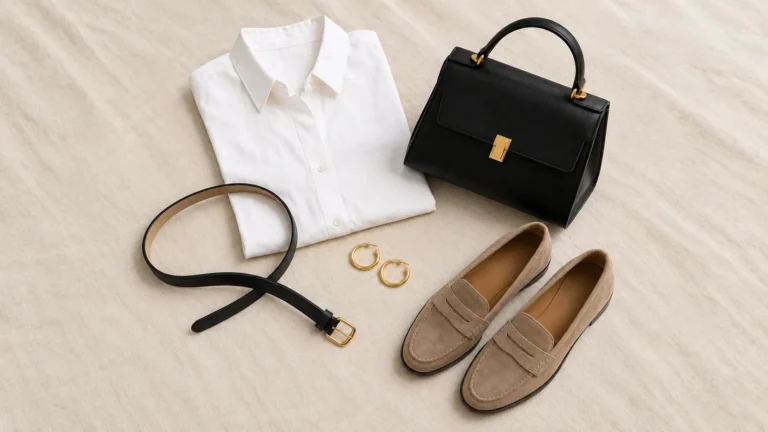
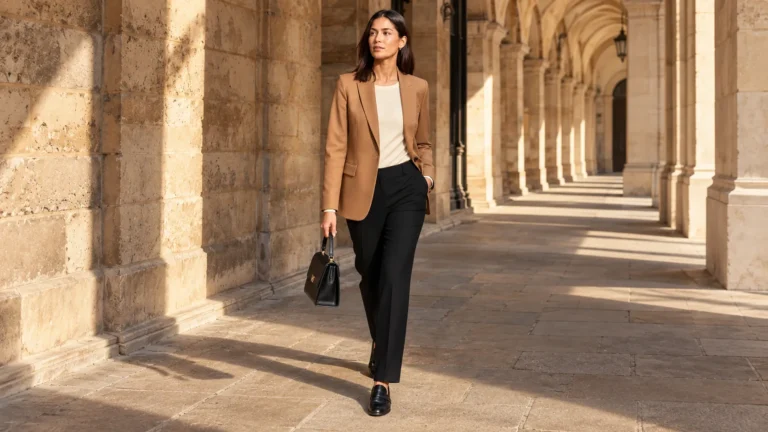
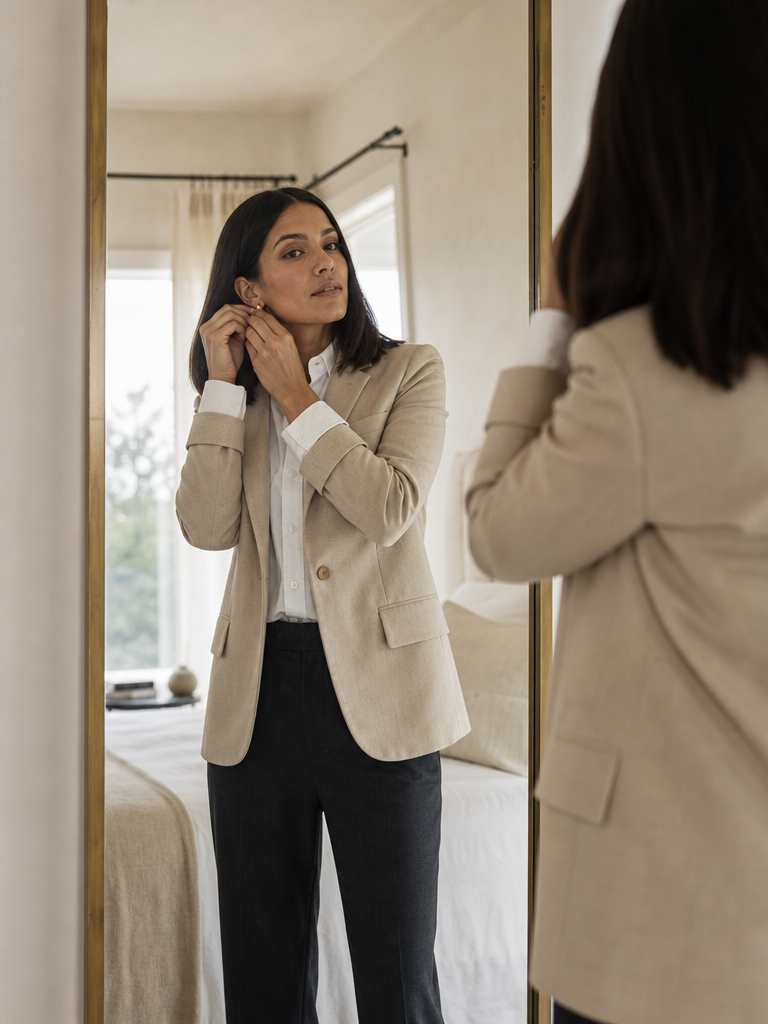
A jacket with a good shoulder, a belt that defines the silhouette or a clearly shaped bag gives the outfit direction. You don’t need all three. Over a tee and trousers, try a single third piece and see if the proportion improves.
If you’re looking for a light third piece, the Siena Cropped Camel Cotton Blazer is an example from the shop: 100% cotton, cropped and unlined, designed to go with high-rise trousers, a skirt or a dress.
3. Make a five-minute adjustment
Roll your shirt cuff, fix the collar, tuck in just the front of your blouse or change your shoes. Look in a full-length mirror. These gestures change how a piece reads without altering it for good.
4. Repeat a simple palette
Two close tones and one contrast connect pieces that seemed unrelated. Ivory, taupe and black are one example, but your palette can be blue, terracotta or any color you happily repeat. Repeating a tone between a garment and an accessory creates continuity.
5. Choose an accessory with a purpose
A small hoop brightens your face. A scarf adds movement to a simple shirt. A structured bag changes a relaxed outfit. Decide where you want the focus and give it room. You’ll find more combinations in common mistakes when pairing accessories.
6. Test the outfit in motion
Walk, sit down and raise your arms before you leave. If you have to keep adjusting your clothes, the look will feel less natural through the day. Choose shoes that suit the commute and the occasion: comfort is part of a good finish too.
You don’t need all six at once. One or two well-done tweaks already show.
Three formulas with everyday pieces
Straight trousers + shirt + blazer or structured cardigan.
Jeans that fit you well + plain top + a personal accessory.
Simple dress + comfortable shoes for the plan + one statement detail.
In each formula you can change color, texture and silhouette to suit your aesthetic. If you’re not sure of yours, the guide to the six aesthetics helps you find your footing.
Pick one five-minute formula for tomorrow. Just one.
Start with the formula that looks most like your week. If fit or proportion is what’s holding you back, our list of common fashion mistakes helps you pinpoint it without rebuilding your closet.
Frequently asked question
Does looking put-together require heels?
No. A clean flat shoe that suits the outfit can work just as well.