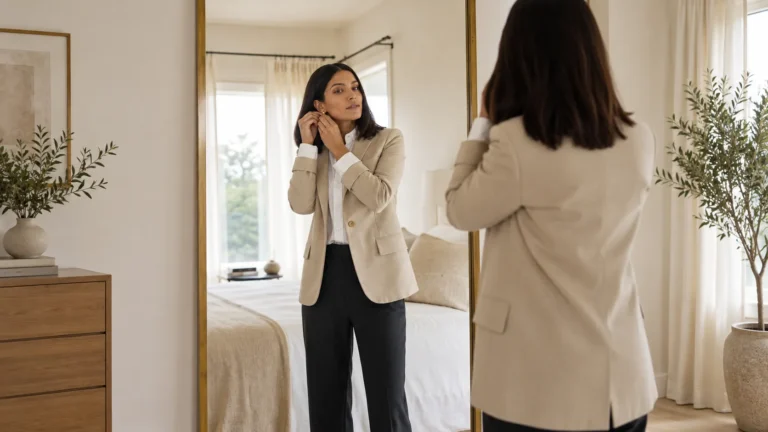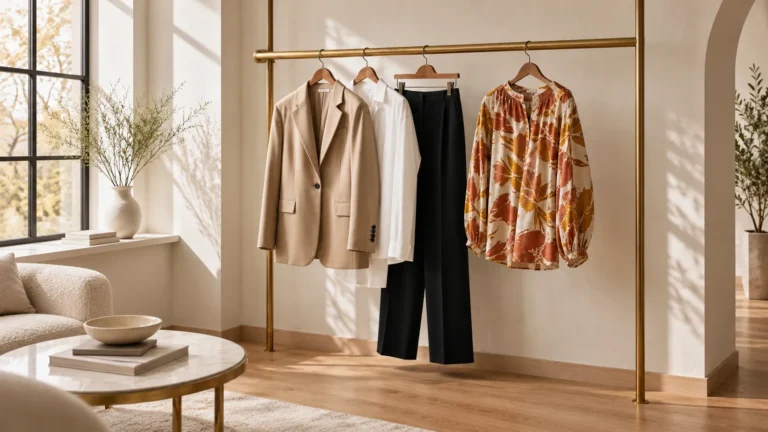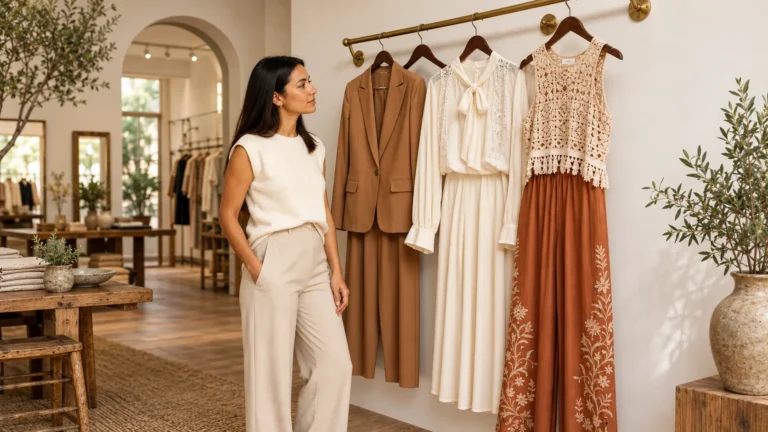

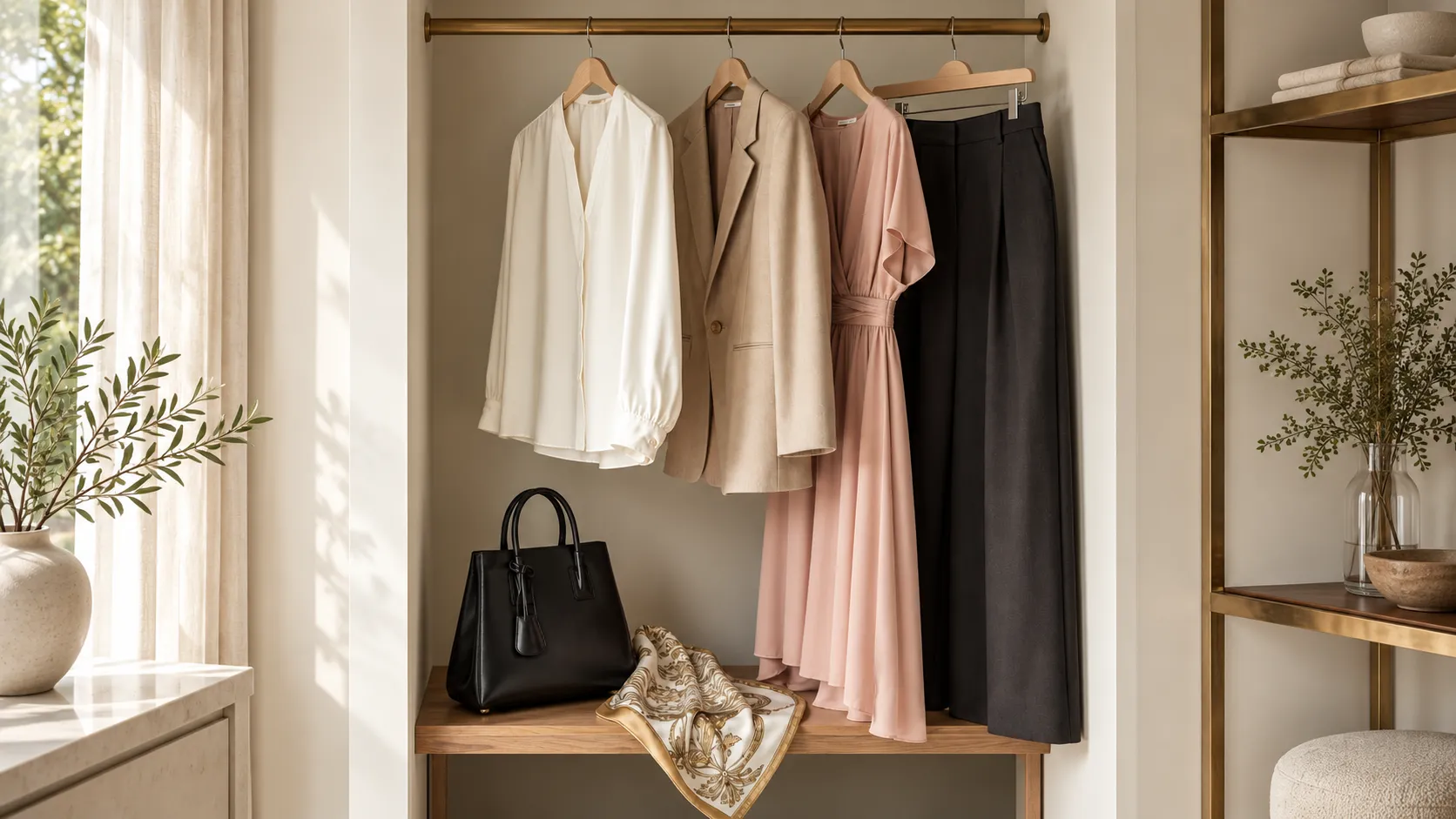
Building a closet by aesthetic means giving coherence to what you already love wearing. You don’t need to empty it, buy a uniform or box yourself into one category. You can have a main aesthetic and borrow details from others.
The goal is simple: open your wardrobe and see possible outfits, not a collection of stray pieces. Here are the five steps.
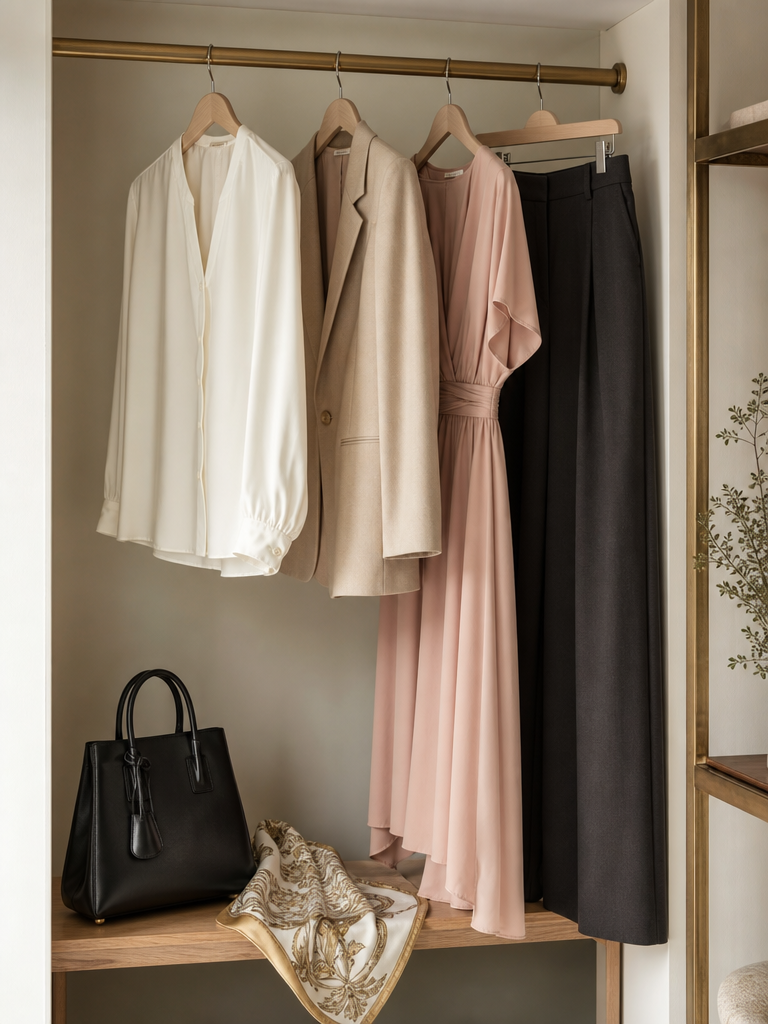
Step 1. Look at what you actually wear
For two weeks, write down the outfits you repeat effortlessly. Notice three things: silhouettes, colors and how dressed up you are. Maybe you always reach for wide-leg trousers with simple shirts. Maybe you prefer soft dresses with understated accessories. Those repeats say more than an inspiration folder you never put into practice.
Then sort what you own into four groups:
- I wear it.
- I like it, but I don’t know how to style it.
- Needs fixing.
- No longer fits my life.
Keep the undecided group while you test outfits. Nobody says you have to get rid of a piece just because it doesn’t match an aesthetic label.
Your real aesthetic is in what you repeat, not in what you save on Pinterest.
Step 2. Choose a base and two accents
A base can be a color, a recurring shape or a bridge piece. For example: straight trousers + plain blouse + third piece. On top of that formula you can add a romantic bow, a structured bag or a bohemian fabric. The result changes, but the wardrobe stays connected.
Think of two or three colors that already fill your favorite pieces and add one accent color you enjoy. That small palette makes pairing easier, though it doesn’t have to limit everything you buy later.
One fixed formula and two rotating accents. That way your closet changes without losing the thread.
Step 3. Translate the six aesthetics into real pieces
| Aesthetic | How it looks on a garment |
|---|---|
| Minimal | Clean lines, few details and shapes that are easy to repeat |
| Romantic | Draping, bows or soft textures |
| Tailored | Structure, defined shoulders and precise cuts |
| Soft Feminine | Delicate tones and light movement |
| Bohemian | A mix of textures, prints and relaxed drape |
| Elegant | Balanced proportions and polished finishes |
They’re tools for reading your clothes, not rules about your body or your age. A white blouse can work with all six: with straight trousers for Minimal, a flowing skirt for Romantic, under a blazer for Tailored, with a soft accessory for Soft Feminine, with a printed skirt for Bohemian, or with dark trousers and measured jewelry for Elegant.
If you want to see each aesthetic in more detail, it’s all in the guide to the six aesthetics.
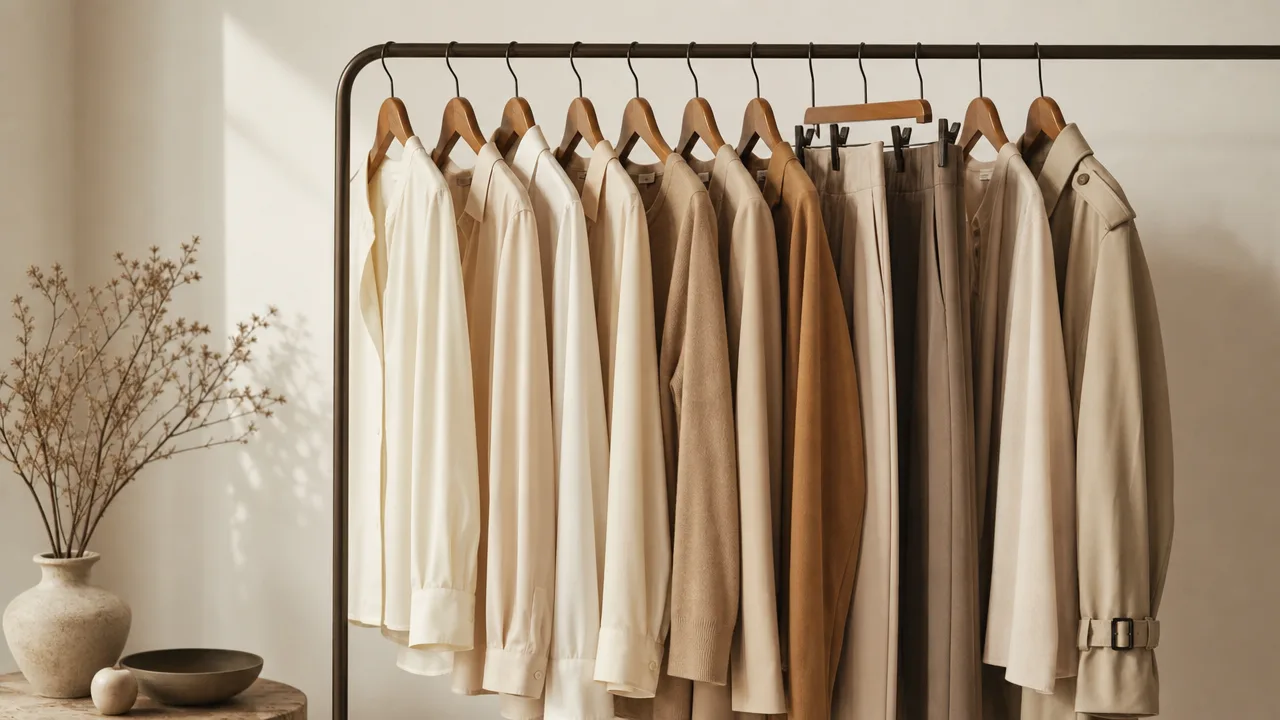
One piece can speak six languages. What changes is what you put next to it.
Step 4. Build three outfit formulas
Test three combinations for real situations in your week: one for everyday, one for going out and one for work or an event. Photograph them head to toe, with shoes and bag. Seeing them together helps you tell a real gap from a purchase driven by a pretty photo.
An example with a Tailored base and a Soft Feminine accent:
Tailored trousers + soft blouse + loafers.
The same trousers + simple top + blazer.
The blouse + plain skirt + small earrings.
One piece shows up in several situations, and each outfit has a different intention. That’s a closet that works for you.
Pick one outfit formula and repeat it three ways. If it works, you’ve found your base.
Step 5. Buy only the missing link
If several outfits stall because you’re missing a comfortable shoe, that purchase will serve you better than another dress like the ones you already own. Bring a specific list: color, silhouette, approximate size and budget. When you shop online, compare the garment’s measurements with a piece of yours that fits well.
Do a small review every time the season changes. Fix buttons, adjust hems and re-photograph your favorite formulas. Your closet works best when it evolves with you.
Still not sure of your direction? Start with our guide to recognizing which aesthetic suits you, or explore each aesthetic in the shop.
Frequently asked question
Can I mix two aesthetics?
Yes. Keep a recognizable base and use the second one in a single element: texture, color, silhouette or accessory.